Instrument
Timpani
Large copper kettledrums that can be tuned to specific pitches.
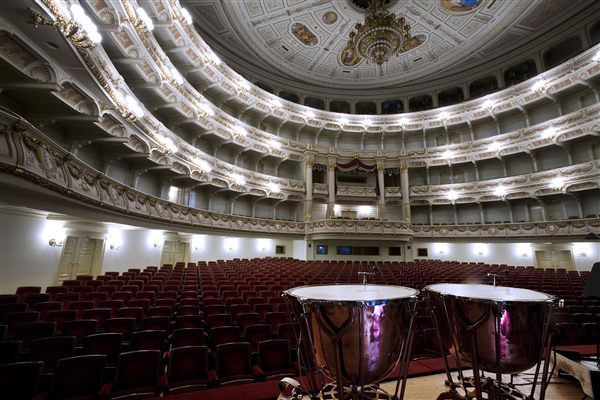
Timpani are large, bowl-shaped copper drums, typically played in sets of two to five, and unlike most of the wider percussion family, they have a definite, tunable pitch: a foot pedal adjusts the tension of the drumhead, letting a player change which note each drum sounds, sometimes even while playing.
For most of the Classical era, timpani were often the orchestra's only regular percussion instrument, typically tuned to the piece's home key and used to reinforce cadences and climactic moments. That gives timpani an outsized dramatic role relative to how rarely they actually play in most pieces - a single, well-placed timpani roll or strike can carry enormous weight precisely because the instrument isn't heard constantly.
Beethoven did more than almost anyone to expand timpani beyond that supporting role, giving them unusually prominent, almost melodic material rather than treating them purely as rhythmic reinforcement. The pedal mechanism that lets a modern player retune a drum smoothly, even mid-performance, wasn't perfected until the late 19th century; earlier timpanists generally had to stop and hand-crank each drum's tuning screws between pieces (or movements) that needed a different key, which made the instrument far less flexible in Beethoven and Mozart's time than it is today.
Where to start listening: the tense, rolling timpani that opens the finale of Beethoven's Symphony No. 9 shows the instrument used for maximum dramatic anticipation. Beethoven's Violin Concerto opens even more unusually - with four solo timpani strokes alone, before any other instrument enters, an audacious choice for its time.