Instrument Family
The Percussion Family
Timpani, snare, cymbals, and more - everything struck, shaken, or scraped.
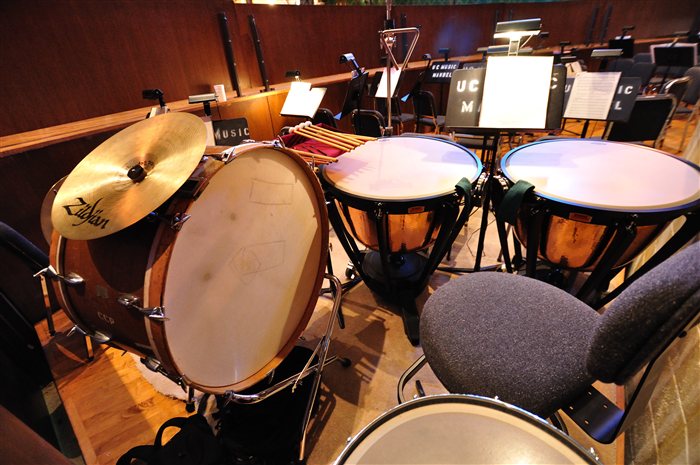
Percussion is the most loosely defined section in the orchestra - essentially anything played by striking, shaking, or scraping rather than bowing, blowing, or plucking a string. That includes instruments with a definite, tunable pitch, like timpani (large copper kettledrums that can be tuned to specific notes), and instruments with no fixed pitch at all, like the snare drum, bass drum, and cymbals.
Unlike the string, woodwind, and brass sections, percussion is rarely playing continuously - composers typically use it sparingly, for rhythmic emphasis, dramatic punctuation, or specific color effects, which means a single well-placed cymbal crash or timpani roll can carry enormous weight precisely because the section isn't heard constantly.
The section has expanded considerably since the Classical era, when timpani were often the only percussion instrument in regular use; the Romantic and 20th-century orchestras added an increasingly wide battery of instruments, including many borrowed from outside the Western classical tradition entirely.
Where to start listening: the timpani-driven opening of Beethoven's Symphony No. 9 and the sudden orchestral crash in Haydn's "Surprise" Symphony both show how much impact a single percussion moment can have.