Instrument
Marimba
The xylophone's big, warm-voiced cousin - with roots in Africa and Central America.
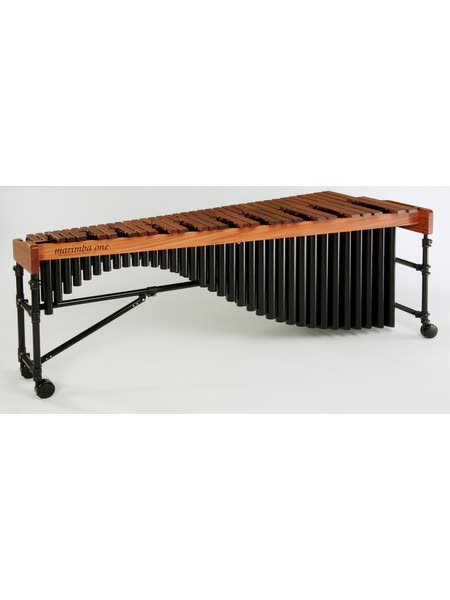
The marimba is a large percussion instrument with wooden bars, laid out like a piano keyboard, and a tube-shaped resonator hanging under each bar. It is a close relative of the xylophone, but bigger, deeper, and softer-toned: struck with yarn-wrapped mallets, its bars produce a warm, rich, glowing sound that has made it one of the most popular solo percussion instruments today.
How it works
The bars are usually made of rosewood, and each is carefully carved underneath so that it sounds not only its main note but a pleasing overtone two octaves higher. The resonators - long metal tubes, each tuned to its bar - amplify the sound and give the marimba its depth. A concert marimba can span five octaves, reaching far lower than the xylophone, and its music is written at the pitch it sounds.
Players use mallets with soft heads of yarn or rubber, and they often hold two mallets in each hand. Four-mallet technique lets a single player play chords, melodies, and accompaniment at once, turning the marimba into a complete solo instrument.
Roots in Africa and the Americas
Instruments with wooden bars over gourd resonators have been played in Africa for centuries, and the name marimba comes from Bantu languages of southern and central Africa. Enslaved Africans brought the instrument to Central America, where it took root and developed, especially in Guatemala and southern Mexico. The marimba is the national instrument of Guatemala, played by large ensembles at festivals and celebrations. In the early 20th century, American manufacturers built the modern concert marimba, with metal resonators and a keyboard layout.
Marimba, xylophone, or vibraphone?
The xylophone also has wooden bars, but they are tuned differently and struck with hard mallets, so it sounds higher, brighter, and drier. The vibraphone looks similar to the marimba but has aluminum bars and motorized fans in its resonators that make the sound shimmer, and it is a favorite in jazz. The marimba is the warmest and most mellow of the three.
Famous marimba music
- Steve Reich - Music for 18 Musicians and Six Marimbas, where interlocking marimba patterns create a shimmering pulse.
- Keiko Abe - the Japanese virtuoso whose compositions and playing helped make the marimba a concert solo instrument.
- Paul Creston - Concertino for Marimba and Orchestra (1940), one of the first marimba concertos.
- Ney Rosauro - Marimba Concerto No. 1 (1986), one of the most performed percussion concertos.
- Guatemalan marimba ensembles - joyful music for several players on large instruments.
Where to start listening: Six Marimbas by Steve Reich, then a solo marimba piece by Keiko Abe, and a recording of a Guatemalan marimba band. See also the percussion family and minimalism.