Instrument
Glockenspiel
Steel bars and hard mallets - the bright, bell-like sparkle of the orchestra.
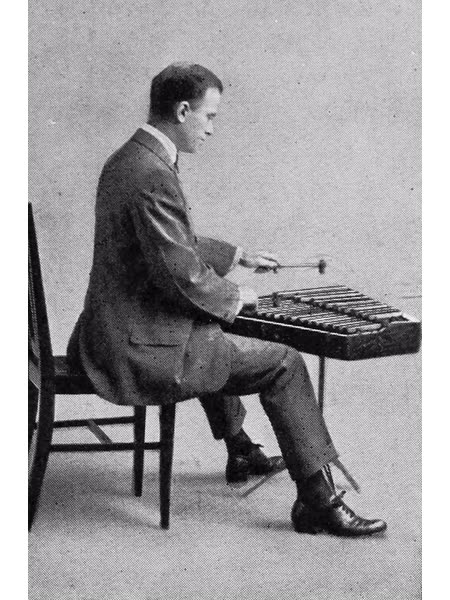
The glockenspiel is a set of tuned steel bars, laid out like the keys of a piano and struck with small, hard mallets. Its name is German for "play of bells," and its sound is exactly that: bright, clear, and ringing, cutting through the whole orchestra with a sparkle that no other instrument quite matches.
How it works
The bars are arranged in two rows, like the white and black keys of a keyboard, and usually sit in a flat case or on a stand. The player strikes them with mallets of hard rubber, plastic, or metal - the harder the mallet, the brighter and more piercing the sound. Because the steel bars ring for a long time, many modern instruments have a damper pedal to stop the sound.
The glockenspiel plays very high: its music is written two octaves lower than it sounds, to save the player from reading endless notes above the staff. In the orchestra it is played by a member of the percussion section.
Glockenspiel, celesta, or xylophone?
These three instruments are easy to confuse. The celesta also has metal bars, but they are hit by felt hammers worked from a piano-style keyboard, which gives it a softer, sweeter tone. The xylophone is played with mallets like the glockenspiel, but its bars are made of wood, so its sound is drier and shorter. The glockenspiel is the brightest and most bell-like of the three.
A short history
Sets of small tuned bells were used in church and court music for centuries, and in the 18th century composers began writing for keyboard instruments that struck bells or metal bars. The most famous early example is in Mozart's The Magic Flute (1791), where the bird-catcher Papageno's magic bells are played on a keyboard glockenspiel. The modern mallet glockenspiel joined the Romantic orchestra in the 19th century, and it is also a fixture of marching bands, where it is carried upright as the bell lyre.
Famous glockenspiel moments
- Mozart - The Magic Flute, Papageno's enchanted bells.
- Wagner - "Magic Fire Music" from Die Walküre, where it adds flickering points of light to the flames.
- Paul Dukas - The Sorcerer's Apprentice, adding sparkle to the magic.
- Debussy - La Mer, where it adds glints of light to his portrait of the sea.
- Richard Strauss - Don Juan, where it adds glitter to the orchestra's brilliant colors.
- Pop and rock - from Bruce Springsteen's "Born to Run" to countless film and Christmas scores, the glockenspiel is the sound of shimmer and magic.
Where to start listening: Papageno's bell music in Act 2 of The Magic Flute is pure delight. Then listen for the glockenspiel's sparkle in Wagner's "Magic Fire Music."