Musical Form
Minimalism
Music built from small repeating patterns that shift gradually over time.
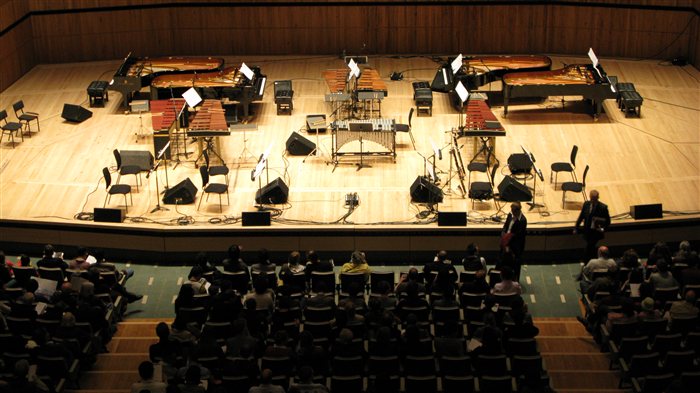
20th / 21st Century Style
Minimalism builds music from small melodic or rhythmic patterns, repeated steadily and then altered gradually - a note added, a rhythm shifted slightly, a new layer introduced - rather than through the dramatic contrast and development that drives most earlier classical music. The effect is often hypnotic: change happens, but slowly enough that a listener can feel it unfolding rather than being surprised by it.
The style emerged in the United States in the 1960s and 70s as a reaction against the extreme complexity of mid-century modernism (including serialism), offering listeners something more direct and texturally simple, even when the underlying process generating the music is quite rigorous.
Steve Reich's signature technique, phasing, makes that rigor audible: two performers play the same short pattern in unison, then one gradually speeds up or shifts slightly out of sync with the other, generating constantly evolving new rhythmic combinations from identical raw material. John Adams extended minimalist technique into a more overtly dramatic, narrative context in operas like Nixon in China, and the style's steady pulses and layered repetition went on to influence film scoring and popular electronic music well beyond the concert hall.
Composers to know: Philip Glass, Steve Reich, and John Adams are the style's most influential figures, each with a distinct approach to repetition and gradual change.
Where to start listening: Philip Glass's Glassworks is a gentle, accessible introduction; Steve Reich's Music for 18 Musicians rewards longer, more immersive listening.