Composer
William Byrd
Elizabethan England's greatest composer - and a Catholic writing in secret.
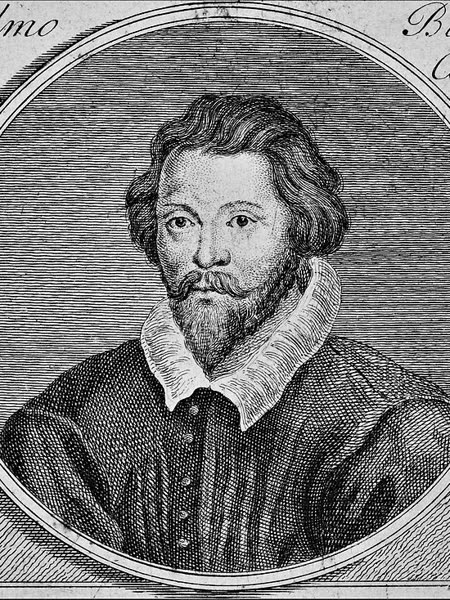
William Byrd was the greatest English composer of the Renaissance, a master of everything from church music to keyboard pieces and songs. He lived a remarkable double life: a loyal musician to the Protestant Queen Elizabeth I, and at the same time a devout Catholic who wrote music for worship that was then illegal.
Life in brief
Byrd was born around 1540, probably in London, and likely studied with Thomas Tallis, the leading English composer of the previous generation. In 1563 he became organist and choirmaster of Lincoln Cathedral, and in 1572 he joined the Chapel Royal, the queen's own body of court musicians, where he worked alongside Tallis.
In 1575 Elizabeth granted Byrd and Tallis a monopoly on printing music in England, and the two published a joint collection of Latin motets, Cantiones sacrae, dedicated to the queen. Byrd's ties to the court protected him, but as a Catholic he lived under suspicion: he and his family were repeatedly fined for not attending the official Protestant services.
From the 1590s he lived in the Essex countryside, close to a Catholic nobleman's household, and wrote Masses for the small, secret Catholic services held in private homes. He died in 1623, in his eighties; the records of the Chapel Royal called him "a Father of Musick."
Music and style
Byrd's music is expressive, inventive, and deeply felt. His Latin church music often carries a hidden charge: texts about exile, persecution, and the longing for deliverance, which Catholics of his time would have understood as being about their own situation. He also wrote superb music for the Protestant church in English, showing that he could serve both traditions.
Byrd was equally important as a keyboard composer - the virginal, a small harpsichord, was enormously popular in Elizabethan homes - and his variations, dances, and fantasias laid the foundations of English keyboard music. He wrote songs and music for viol consorts too.
Key works
- The three Masses (for three, four, and five voices) - published in the 1590s without title pages, so that they could circulate quietly. See Mass.
- Gradualia (1605 and 1607) - music for the Catholic church year, published in dangerous times, shortly after the Gunpowder Plot.
- Ave verum corpus - a short, tender motet, and one of his most loved works.
- The Great Service - a grand setting of the Anglican service.
- My Ladye Nevells Booke (1591) - a collection of his keyboard music, including the bell-like variations "The Bells."
- "Lullaby, my sweet little baby" - from his 1588 collection of songs.
Legacy
Byrd's music laid the groundwork for English music for generations, and his Masses are sung today in cathedrals and concert halls alike. Alongside Thomas Tallis, he stands at the summit of the English choral tradition, which still thrives in its cathedral and collegiate choirs.
Where to start listening: Ave verum corpus is four minutes of quiet, heartfelt beauty. Then try the Agnus Dei from the Mass for Five Voices, or, for his keyboard music, "The Bells" played on a harpsichord or virginal.