Composer
Guillaume Du Fay
The most famous composer of the 15th century, and a founder of the Renaissance sound.
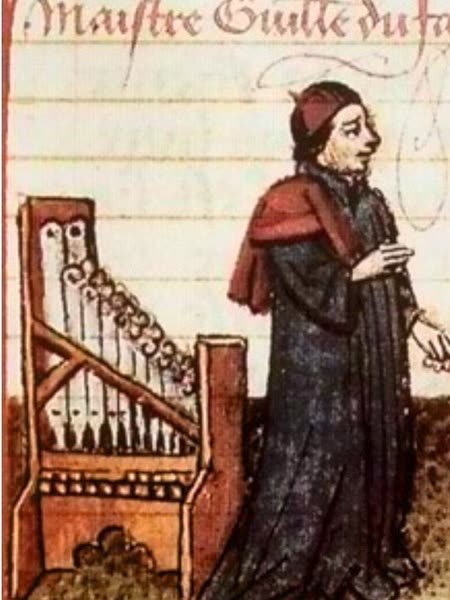
Guillaume Du Fay (often spelled Dufay) was the most celebrated composer of the 15th century. Working between northern France and Italy, he blended the music of both into a sweeter, fuller style that helped launch the Renaissance in music, and his Masses, motets, and songs were admired across Europe.
Life in brief
Du Fay was born around 1397, probably near Brussels, and grew up in Cambrai, in what is now northern France, where he became a choirboy at the cathedral - one of the finest musical establishments in Europe. As a young man he went to Italy, where he worked for the Malatesta family of Rimini and Pesaro, and in the late 1420s and 1430s he sang in the papal choir in Rome and Florence.
He also served the dukes of Savoy, and he moved easily among the most powerful courts and churchmen of his day. In 1436 he wrote the motet Nuper rosarum flores for the consecration of Florence Cathedral, crowned with Brunelleschi's great new dome, in the presence of the Pope. He became a canon of Cambrai Cathedral, and from the late 1450s he lived there permanently, honored as the greatest musician of his age, until his death in 1474.
He planned his own departure carefully: his will asked for his motet Ave regina caelorum, in which he weaves a plea for mercy on "your dying Du Fay" into the text, to be sung at his deathbed.
Music and style
Du Fay absorbed the sweet, consonant harmonies of English composers such as John Dunstaple - a poet of the time praised him and his colleague Gilles Binchois for adopting the "English manner" - and joined them to French rhythmic sophistication and Italian melody. The result was smoother, richer, and more singable than earlier music.
He was also a pioneer of the cyclic Mass, in which all the movements of the Mass are built on the same borrowed melody, the cantus firmus, which might be a chant or even a popular song. This became the standard way of writing a Mass for the next century.
Key works
- Nuper rosarum flores (1436) - a majestic four-voice motet for the dedication of Florence Cathedral.
- Missa L'homme armé (c. 1460) - one of the first of many Masses based on the popular song "The Armed Man."
- Missa Se la face ay pale - a Mass built on the tenor of his own love song, a sign of how freely sacred and secular music mixed.
- Ave regina caelorum (1464) - the deeply personal motet he wanted sung as he died.
- "Se la face ay pale" - a lovely French chanson, or song, about the pale face of a lover.
- "Vergene bella" - a setting of a prayer to the Virgin by the Italian poet Petrarch.
Legacy
Du Fay set the course for the great Franco-Flemish composers who followed, from Johannes Ockeghem to Josquin des Prez. His music was copied in manuscripts across Europe, and today it is a favorite of early-music ensembles, who reveal its sweetness and grandeur. See also choral music.
Where to start listening: Nuper rosarum flores, then the song "Se la face ay pale" and the Kyrie of the Mass built on it, to hear how a love song becomes sacred music.