Composer
Josquin des Prez
The most celebrated composer of the Renaissance - "the master of the notes."
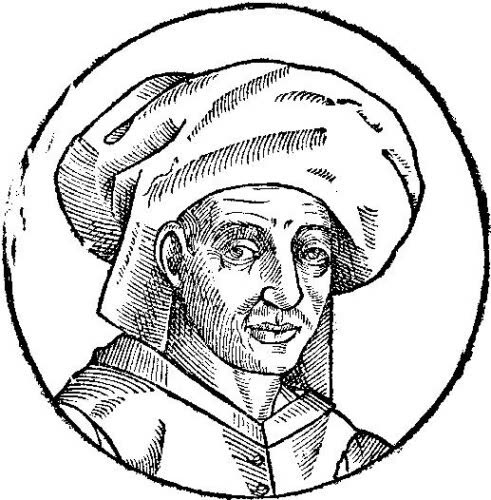
Josquin des Prez was the most celebrated composer of his age, admired across Europe in his lifetime and for generations afterward. His music combines the intricate polyphony of the Franco-Flemish tradition with a new clarity and expressive directness, and it set the standard that later Renaissance composers measured themselves against.
Life in brief
Josquin was born around 1450, probably in northern France, in the French-speaking region that produced so many of the era's great composers. Much about his early life is uncertain, and scholars have had to untangle him from other musicians with similar names in the surviving records.
He spent much of his career in Italy, then the richest market for composers. He served members of the powerful Sforza family and, from 1489 to about 1494, sang in the papal choir in Rome - his name is still carved into the wall of the Sistine Chapel's choir loft. In 1503 he became music director to Duke Ercole d'Este of Ferrara. One of the duke's agents famously warned that Josquin "composes when he wants to, and not when one wants him to," and wanted a far higher salary than a rival candidate; another agent recommended him anyway, and the duke hired Josquin. Josquin spent his last years as provost of a church at Condé-sur-l'Escaut, in present-day France, where he died in 1521.
Music and style
Josquin's music is built on imitation: voices entering one after another with the same melody, passing ideas through the texture so that every line matters. But he was equally concerned with the words. He shaped his melodies to the natural rhythm and meaning of the text, and he varied his textures - contrasting pairs of voices with full choir - to make the structure of a piece clear to the ear. That balance of craft and expression is what made him a model for others.
His reputation was helped by a new technology. In 1502, the Venetian printer Ottaviano Petrucci published a whole volume of Josquin's Masses - the first printed book devoted to the Masses of a single composer - and two more volumes followed. The reformer Martin Luther was an admirer, reportedly saying that Josquin was "the master of the notes; others are mastered by them."
Key works
- Ave Maria... virgo serena - a motet to the Virgin Mary, and his best known work: luminous, clear, and full of imitation between the voices.
- Missa Pange lingua - a late Mass built on a medieval hymn tune, often considered his masterpiece.
- Missa Hercules Dux Ferrariae - a Mass whose main theme spells out his patron's name, the syllables of "Hercules Dux Ferrariae" turned into musical notes.
- Miserere mei, Deus - a penitential psalm setting of great intensity, written for Ferrara.
- Nymphes des bois - a moving lament on the death of the composer Johannes Ockeghem.
Legacy
For decades after his death, so much music was attributed to Josquin that modern scholars have had to weed out pieces that were really by other composers - a sign of how famous his name had become. What remains is one of the great bodies of music of the Renaissance, and his approach to imitation and word-setting shaped the composers who followed, including Palestrina.
Where to start listening: Ave Maria... virgo serena is the perfect introduction - five minutes of radiant, perfectly balanced polyphony. Then try a movement from the Missa Pange lingua, sung by a small vocal ensemble.