Musical Era
Medieval
Chant, monophony, and the birth of written music.
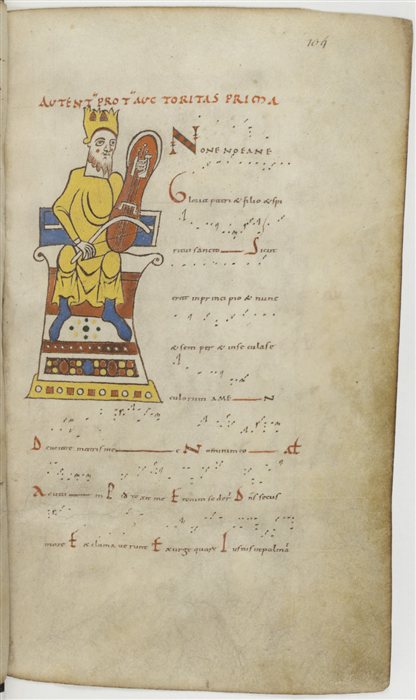
The Medieval era covers roughly nine hundred years and is where written Western music begins. For most of this period, music meant Gregorian chant: a single unaccompanied melodic line, sung in Latin, in church. There was no harmony in the modern sense - just one voice (or a group singing in unison) tracing a melody shaped by the words of the liturgy.
The lasting contribution of this era is notation itself. Before roughly the 9th century, chant melodies were passed down by ear. The gradual development of neumes, and later a four- and then five-line staff, made it possible to write music down with enough precision that it could be performed accurately centuries later - the entire rest of this site's timeline depends on that invention.
Late in the era, composers began layering two or more independent melodic lines on top of each other, a technique called polyphony. This was a genuinely radical shift, and it's the thread that connects Medieval music to everything that follows in the Renaissance.
Where to start listening: Hildegard von Bingen's chant compositions are a good entry point - strange and beautiful to modern ears, and mercifully free of the "unfamiliar old music" barrier that can make this era feel remote.