Composer
Hildegard von Bingen
A Benedictine abbess whose chant is among the earliest music we can still attribute to a named composer.
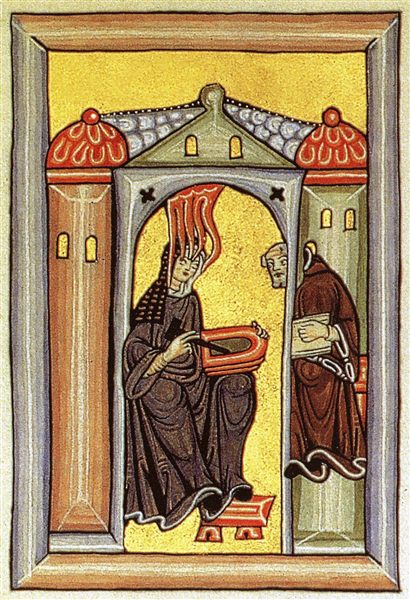
Hildegard von Bingen was a Benedictine abbess, writer, and mystic whose surviving music makes her one of the earliest composers in Western history whose name we can actually attach to specific surviving works
- most Medieval era chant survives anonymously, passed down through generations of unnamed church musicians.
Her music consists of monophonic chant - a single melodic line, no harmony - but is notable for its unusually wide melodic range and soaring, expressive lines compared to much of the plainchant repertoire around it. Her Ordo Virtutum ("Order of the Virtues") is a sung music drama depicting a battle for a human soul's salvation, making it one of the earliest surviving works of musical theater, predating opera by roughly 450 years.
Beyond music, Hildegard was a significant figure in her own right as a theologian, naturalist, and correspondent with popes and kings - her music represents just one part of an unusually wide-ranging body of work for anyone in the 12th century, regardless of gender.
Where to start listening: any recording of her chant compositions is a good starting point - the Ordo Virtutum is the most substantial single work to explore once the shorter chants feel familiar.